Welcome to the October Edition of Our Development Digest!
“Within you, there is a stillness and a sanctuary to which you can retreat at any time and be yourself.”
- Hermann Hesse
This month, we are exploring what happens when life moves too fast for too long. After spending October examining Hustle Culture on our podcast, we are turning our attention in this digest to the toll that constant busyness and pressure can take on our physical and emotional well-being.
Our theme, What Stress Does to Your Body, offers both awareness and hope. Inside, you’ll find encouragement to slow down, practical ways to restore balance, and gentle reminders to support you. When you listen, breathe, and care for yourself, healing begins naturally.
So, take a moment to pause, settle in, and enjoy this month’s issue, which we created with the intention of helping you feel calmer, clearer, and more connected to yourself.
The Hidden Costs of Stress and How to Reclaim Your Calm
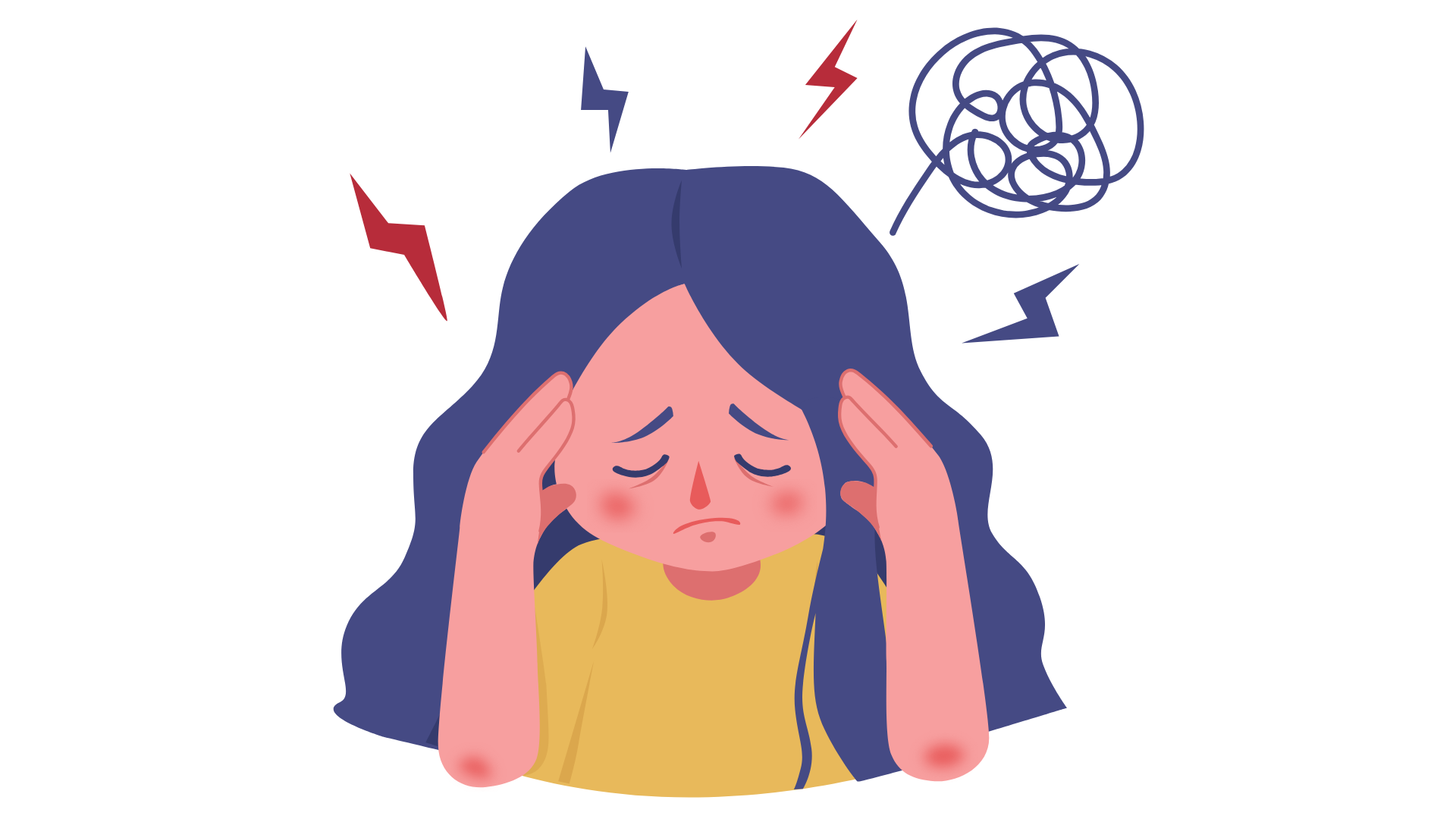
Stress is often worn like a badge of honor in our culture. We say we’re “so busy,” “just trying to keep up,” or “burning the candle at both ends.” What we sometimes overlook is that stress isn’t simply a feeling. More accurately, it’s a full-body experience. When our stress response is constantly activated, it takes a toll on nearly every system in our body.
Prolonged stress floods the body with cortisol and adrenaline. These hormones are helpful in short bursts, such as when you need to meet a deadline or respond quickly to a challenge, but over time, they can cause wear and tear. For instance, chronic stress can lead to headaches, high blood pressure, digestive problems, fatigue, and even a weakened immune system. Additionally, it can also interfere with sleep, make it harder to concentrate, and increase feelings of irritability or sadness.
Stress keeps our bodies in “survival mode,” even when there’s no immediate threat.
The good news is that the body is remarkably resilient. When we learn to interrupt the stress cycle and return to balance, healing begins almost immediately. Small, consistent changes can make a big difference.
Here are a few ideas to help you start regulating your nervous system and feel less stress:
Pause and Breathe - A few slow, intentional breaths signal to your nervous system that it’s safe to relax. Try inhaling for a count of four, holding for two, and exhaling for six. Do that for a few minutes until you start feeling calmer.
Engage Your Senses - Notice the sights, sounds, and textures around you. Being fully present in the moment helps soothe your mind and anchor you in your body.
Move Gently - Whether it’s a short walk, stretching, or dancing to your favorite song, movement releases tension and helps process stress hormones.
Connect with Others - Sharing your thoughts and feelings with someone you trust can transform stress into connection.
Create Moments of Peace - Even five minutes of stillness each day can help restore your sense of equilibrium. Sit down for a cup of tea in silence, take a short walk outside to observe nature, or settle into a cozy spot to journal or reflect quietly.
Stress is part of being human, but it doesn’t have to define your life. By listening to your body’s signals and prioritizing calm, you remind yourself that peace is not something you earn; it’s something you can choose.
When you care for your nervous system, you care for every part of yourself.


To make our podcast available to our growing audience, Morning Intentions is now on YouTube!
As we mentioned above, Hustle Culture was our podcast theme for most of October. Hustle Culture is that constant push to do more, achieve more, and be more. We discussed how easy it is to lose touch with ourselves when our worth becomes tied to productivity. Many of us have learned to measure success by how busy we are, yet beneath the surface, that endless striving often leaves us feeling anxious, disconnected, and exhausted.
We invite you to catch up on our Hustle Culture series if you haven’t already listened to it.
If Hustle Culture is the external expression of doing too much, chronic stress is what happens internally when we try to sustain our never-ending push to do more, achieve more, and be more. Our body reflects our pace: are you tensing your shoulders, taking shallow breaths, or is your mind racing? These are all messages that something needs our attention.
Throughout November and December, we will focus on themes that build on our time discussing Hustle Culture. If you’ve ever felt caught in the cycle of doing, this is the perfect time to pause and listen in.
Together, we’ll explore what it means to live with more presence, less pressure, and a deeper sense of purpose.
Take a deep breath, make yourself a warm drink, and join us each weekday as we continue the journey from hustle to healing, one intention at a time!


Q: I have enjoyed your discussions on Hustle Culture. Thank you both for being so real! I find myself relating to both of you. My struggle is that when I finally slow down, I feel guilty or restless. How do I actually let myself relax without thinking about what I “should” be doing?
A: First things first: Thank you very much for being part of our podcast community! We appreciate you listening.
Your question is one many of us have had, including Ada, as you probably already know from what she shared early on in our Hustle Culture series. Many of us have been conditioned to equate busyness with our value or sense of self-worth. If we’re not accomplishing something, it can feel like we’re wasting time or falling behind. Please know that your guilt and restlessness are not signs that you’re doing something wrong. The truth is, they are signs that your nervous system has been trained to stay “on.”
When we spend long stretches of time in productivity mode, our bodies adapt to that constant motion. Thus, when we try to rest, the body doesn’t immediately know how. It’s like driving at highway speed and suddenly hitting a stoplight. Your body needs time to slow down before it can truly stop.
The first step is to reframe rest as a necessary part of your well-being, not a luxury.
Remind yourself that your body isn’t asking for permission to rest, it’s asking for recovery.
The more you practice pausing, the easier it becomes to let go of that inner voice that says, “You should be doing more.”
As Ada always reminds us, start with something small:
Take five quiet minutes with no distractions. This means no phone, no to-do list. Notice your breathing. Feel your feet on the floor or the warmth of your tea mug in your hands. This may sound simple, but these small acts of awareness begin retraining your nervous system to feel safe in stillness.
You might also explore what rest looks like for you. For some, it’s sitting in silence; for others, it’s gardening, walking, or reading. (As you know, for Annette, it is working on a creative project!) The key is to find what feels restorative to you, not just what looks restful from the outside.
Over time, rest stops feeling like “doing nothing” and starts feeling like coming home to yourself, your peace, and your natural rhythm. That’s not laziness. That’s balance.
Please stay in touch and let us know how you are doing!
With care,
Annette and Ada
——————————————-
Do you have questions about personal development, navigating relationships, or creating a more balanced and fulfilling life? If you have a question, there’s a very good chance you are not alone, and now’s your chance to ask us directly! Each month, we’ll choose one or more questions to answer in our newsletter. Whether you’re seeking advice on setting boundaries, developing self-understanding, or simply finding peace in the midst of life’s challenges, we’re here to provide you with thoughtful, compassionate insights.
Your privacy is our priority. While we’ll share your questions and our answers, we’ll never share your name or identifying details. Feel free to ask any personal development question that’s on your heart or mind. This is your opportunity to gain clarity and guidance in a safe and supportive space.
To submit your question, visit the newsletter page of our website and click the big button that says “Submit Your Question for Ask Annette and Ada.”
Send us your questions today, and you might see your answer in our next edition of Development Digest.
October’s Recommendation:
Prioritize Your Own Well-Being
You probably remember us saying, “You can’t give from an empty well.” We say this often because many people put themselves near the bottom of their priority list. They take care of others, push through exhaustion, and keep adding to their to-do lists, believing that if they just keep going, things will eventually calm down. But the truth is, peace doesn’t come from doing more. Peace comes from consciously making your own well-being a priority.
Prioritizing yourself isn’t selfish; it’s essential.
When you tend to your mental, emotional, and physical health, you strengthen the foundation that allows you to show up for others in meaningful ways. Stress and burnout often sneak in when we ignore that foundation, convincing ourselves that rest or pleasure must be “earned.” But your body and spirit don’t need to earn care; they thrive on care.
Start by checking in with yourself daily. Ask, What do I need today to feel supported? Maybe it’s a quiet walk, a nourishing meal, or a few minutes of silence before bed. Protect your time for these small moments as you would any important appointment. Over time, they add up to a more balanced, centered you.
You might also consider setting boundaries around your energy. Saying “no” can be a powerful form of self-respect. It doesn’t close you off from others as some might think, because in reality, it allows you to participate in life from a place of clarity and strength.
This month, give yourself permission to move your own well-being to the top of the list.
When you are rested, grounded, and cared for, everything and everyone else in your life benefits!
You deserve to feel well - not someday, but today.
Self-Care Tip of the Month:
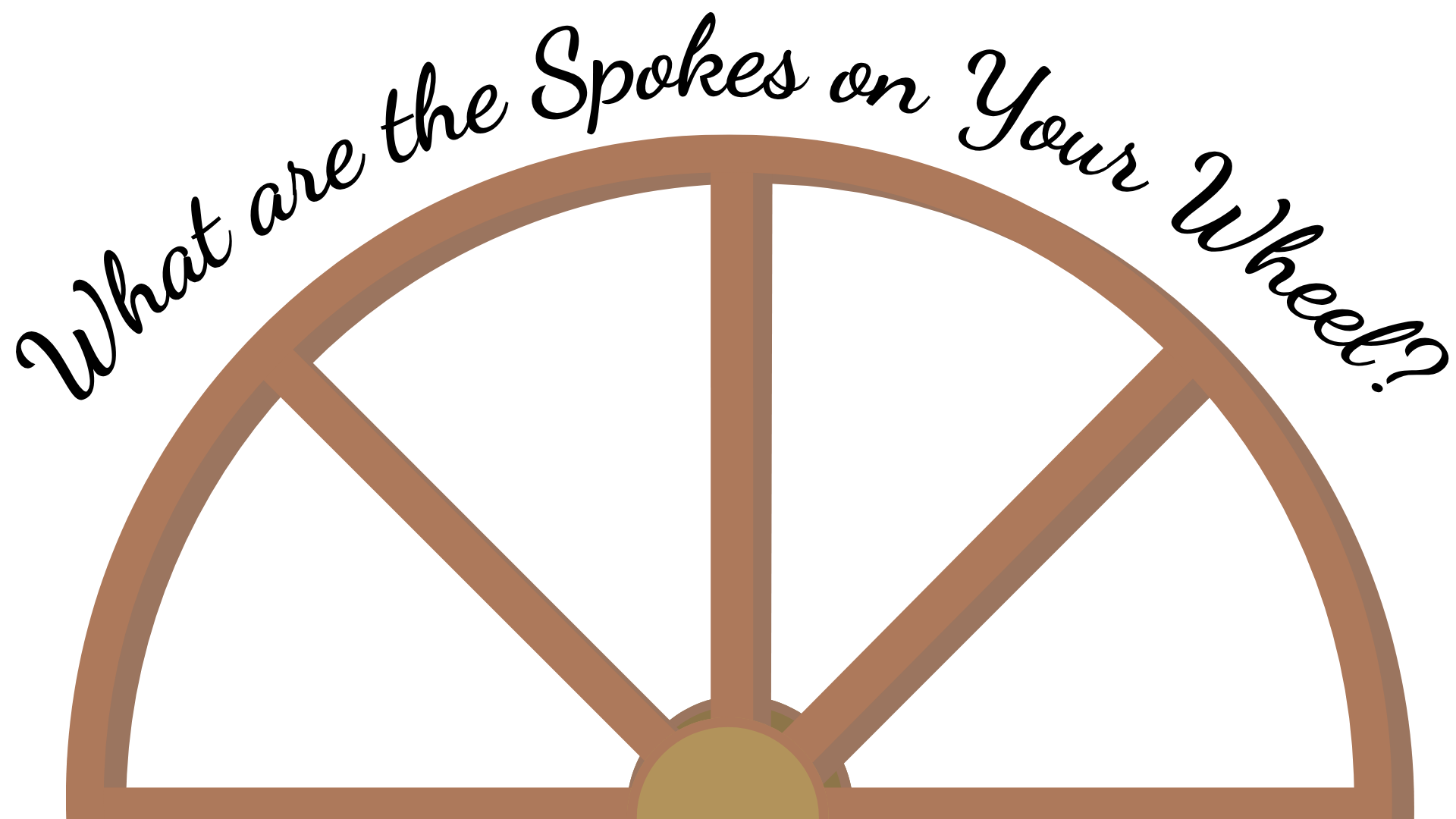
Create a Support System, aka Your Support Wheel
When life feels overwhelming, we often tell ourselves to “handle it” or “be strong.” While independence is valuable, true strength also comes from knowing when to reach out. Creating a support system isn’t a sign of weakness, as some might think. It’s actually an act of self-care and emotional wisdom.
Stress affects the body in subtle but powerful ways, and one of the best ways to regulate our nervous system is through connection.
Human beings are wired for co-regulation. Our hearts, minds, and bodies calm down when we feel understood and supported by others. Whether it’s a trusted friend, family member, mentor, coach, therapist, or community group, having people you can turn to helps your body shift out of stress and into safety.
Ada created the above diagram to help you visualize who is in Your Support Wheel. If you’ve come in for coaching lately, we have probably given you a handout to take home and fill out. If you are not sure who you would like to include in your wheel, start small by identifying a few people with whom you can be honest without fear. These individuals listen without judgment, celebrate your growth, offer practical help, and sometimes they simply share laughter.
Equally important is being part of someone else’s support system. Offering empathy, encouragement, or presence strengthens your own sense of connection and purpose.
If your current Support Wheel feels limited, consider expanding it by joining a local class, a book group, or an online community that aligns with your values and interests. Meaningful connection doesn’t require a crowd; it requires authenticity.
Remember: you don’t have to face life’s challenges alone. When you surround yourself with people who lift you up, you give your body and mind permission to rest, knowing you’re held with care by the support system you’ve intentionally created around you.
Homemade Egg Drop Soup

Warm, comforting, and nourishing, homemade egg drop soup is a reminder that caring for yourself doesn’t have to be complicated! With just a few ingredients, this simple recipe soothes the body and brings a sense of calm to even the busiest days. Annette makes this a few times every month once the weather starts to turn cooler and makes it all the way through springtime! She enjoyed the final cup of her most recent batch today for lunch. This soup is great for dinner with a salad, or as a warm lunch in a cup. It is easy and something we never grow tired of, that is for sure!
To make the homemade chicken broth, we get a small whole chicken and simmer it in the slow cooker overnight. We freeze the broth we don’t use in our soup for other meals and use the chicken meat for sandwiches or in our dinner salads.
Ingredients:
4 cups homemade chicken broth
2 large eggs (more if you prefer – Annette uses 4 eggs)
1 tablespoon cornstarch (optional, for a thicker texture)
2 tablespoons water (to mix with cornstarch, if using)
2–3 green onions, thinly sliced
½ cup peas and carrots (optional)
Salt and pepper to taste
A few drops of toasted sesame oil or a drizzle of tamari or soy sauce (optional for flavor)
Instructions:
In a medium saucepan, bring the homemade chicken broth to a gentle simmer.
If using cornstarch, mix it with 2 tablespoons of water to create a slurry, then stir it into the simmering broth to slightly thicken. (Sometimes, Annette makes it with cornstarch, but not always. The eggs thicken the soup up enough, so this step is not necessary. Go by your personal preference.)
In a small bowl, beat the eggs well.
Reduce the heat to low and slowly drizzle the beaten eggs into the broth in a thin stream while gently stirring the soup in one direction. The eggs will form delicate ribbons.
Add green onions and peas (if using), and simmer for another 1–2 minutes.
Season with salt and pepper to taste, and finish with a touch of sesame oil or tamari if desired.
To serve:
Ladle into warm bowls, top with extra green onions, and enjoy slowly.
Simple, nourishing, and ready in minutes, which is just the kind of care your body appreciates!
